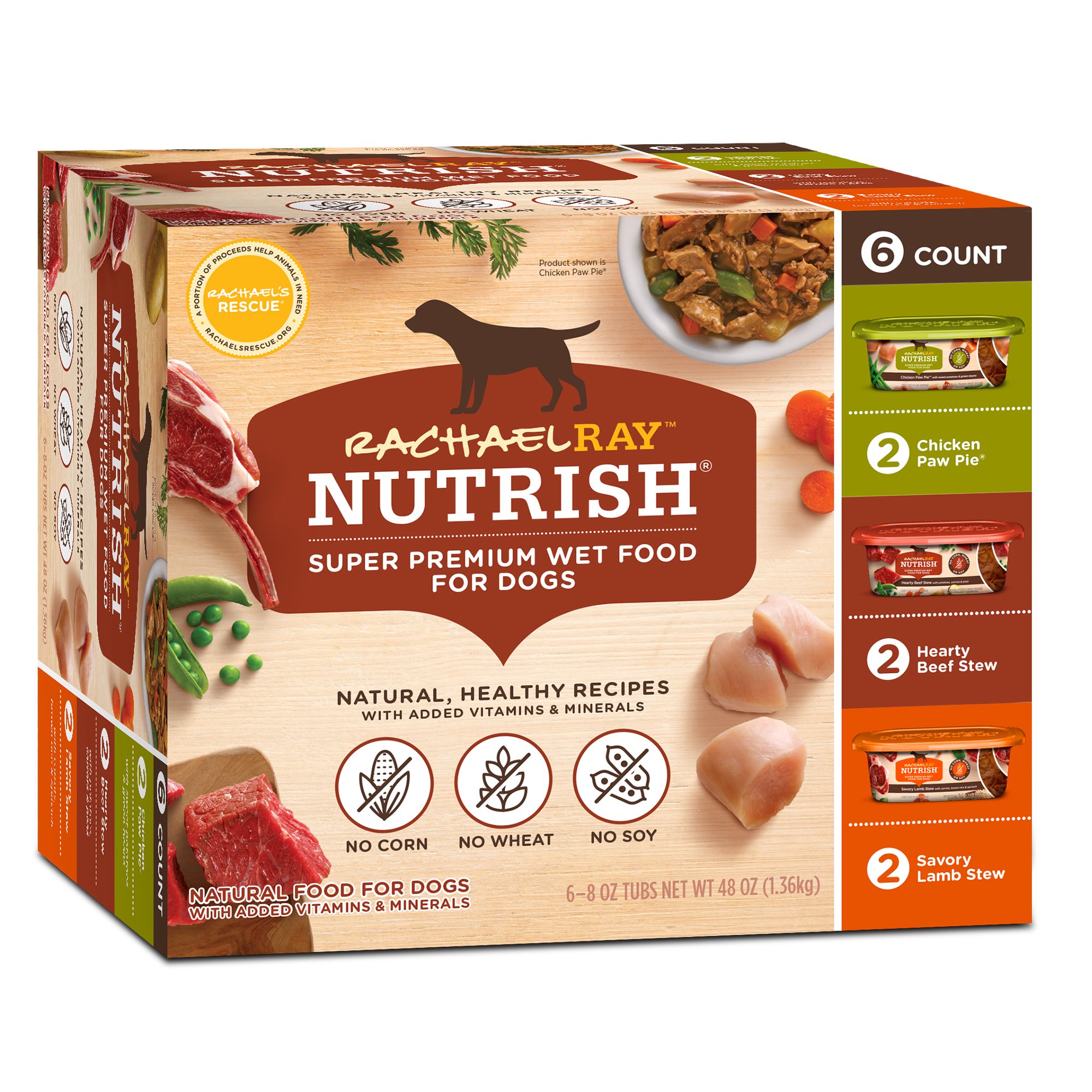
Rachael Ray Nutrish Wet Dog Food All Life Stage - Chicken, Sweet Potato, Green Bean, Beef, Potato
Overall Score: 74/100
Ingredients
- Chicken (protein)
- Dried Egg Product (protein)
- Egg White (other)
- Pea Protein (protein)
- Sweet Potatoes (carbohydrate)
- Green Beans (other)
- Pineapple (other)
- Ground Tapioca (other)
- Dicalcium Phosphate (mineral)
- Natural Flavor (additive)
- Guar Gum (additive)
- Potassium Chloride (mineral)
- Choline Chloride (vitamin)
- Salt (mineral)
- Calcium Carbonate (mineral)
- Magnesium Sulfate (other)
- Fish Oil (protein)
- Zinc Proteinate (mineral)
- Iron Proteinate (mineral)
- Caramel (color) (other)
- Celery Powder (other)
- Vitamin E Supplement (vitamin)
- L–ascorbyl–2–polyphosphate (source Of Vitamin C) (other)
- Thiamine Mononitrate (vitamin)
- Niacin (vitamin)
- Copper Proteinate (mineral)
- Manganese Proteinate (mineral)
- Vitamin A Acetate (vitamin)
- Calcium Iodate (mineral)
- Calcium Pantothenate (other)
- Sodium Selenite (mineral)
- Riboflavin (vitamin)
- Vitamin B12 Supplement (vitamin)
- Pyridoxine Hydrochloride (source Of Vitamin B6) (other)
- Folic Acid (vitamin)
- Vitamin D3 Supplement (vitamin)
- Biotin (vitamin)
- Menadione Sodium Bisulfite Complex (source Of Vitamin K Activity)Hearty Beef Stew: Chicken Broth (protein)
- Beef (protein)
- Chicken (protein)
- Dried Egg Product (protein)
- Egg White (other)
- Pea Protein (protein)
- Natural Flavor (additive)
- Potato (carbohydrate)
- Carrots (other)
- Green Pea (other)
- Ground Tapioca (other)
- Dicalcium Phosphate (mineral)
- Guar Gum (additive)
- Caramel (color) (other)
- Potassium Chloride (mineral)
- Salt (mineral)
- Choline Chloride (vitamin)
- Calcium Carbonate (mineral)
- Fish Oil (protein)
- Zinc Proteinate (mineral)
- Iron Proteinate (mineral)
- Magnesium Sulfate (other)
- Celery Powder (other)
- Vitamin E Supplement (vitamin)
- L–ascorbyl–2–polyphosphate (source Of Vitamin C) (other)
- Thiamine Mononitrate (vitamin)
- Niacin (vitamin)
- Copper Proteinate (mineral)
- Manganese Proteinate (mineral)
- Vitamin A Acetate (vitamin)
- Calcium Iodate (mineral)
- Calcium Pantothenate (other)
- Sodium Selenite (mineral)
- Riboflavin (vitamin)
- Vitamin B12 Supplement (vitamin)
- Pyridoxine Hydrochloride (source Of Vitamin B6) (other)
- Folic Acid (vitamin)
- Vitamin D3 Supplement (vitamin)
- Biotin (vitamin)
- Menadione Sodium Bisulfite Complex (source Of Vitamin K Activity)Savory Lamb Stew: Chicken Broth (protein)
- Lamb (protein)
- Dried Egg Product (protein)
- Chicken (protein)
- Egg White (other)
- Pea Protein (protein)
- Ground Tapioca (other)
- Natural Flavor (additive)
- Carrots (other)
- Brown Rice (carbohydrate)
- Dicalcium Phosphate (mineral)
- Guar Gum (additive)
- Potassium Chloride (mineral)
- Spinach (other)
- Choline Chloride (vitamin)
- Salt (mineral)
- Magnesium Sulfate (other)
- Calcium Carbonate (mineral)
- Caramel (color) (other)
- Fish Oil (protein)
- Zinc Proteinate (mineral)
- Iron Proteinate (mineral)
- Celery Powder (other)
- Vitamin E Supplement (vitamin)
- L–ascorbyl–2–polyphosphate (source Of Vitamin C) (other)
- Thiamine Mononitrate (vitamin)
- Niacin (vitamin)
- Copper Proteinate (mineral)
- Manganese Proteinate (mineral)
- Vitamin A Acetate (vitamin)
- Calcium Iodate (mineral)
- Calcium Pantothenate (other)
- Sodium Selenite (mineral)
- Riboflavin (vitamin)
- Vitamin B12 Supplement (vitamin)
- Pyridoxine Hydrochloride (source Of Vitamin B6) (other)
- Folic Acid (vitamin)
- Vitamin D3 Supplement (vitamin)
- Biotin (vitamin)
- Menadione Sodium Bisulfite Complex (source Of Vitamin K Activity) (other)
Ingredient concerns
- Pea Protein (medium concern): Plant-based protein concentrates like pea protein can artificially inflate the total protein percentage on guaranteed analysis without providing the same amino acid profile as animal proteins. Associated with the FDA investigation into grain-free diets and dilated cardiomyopathy (DCM) in dogs, though a causal link has not been definitively established.
- Caramel Color (high concern): Certain classes of caramel color (Class III and IV, produced with ammonia or ammonia-sulfite processes) contain 4-methylimidazole (4-MEI), which has been classified as 'possibly carcinogenic to humans' (Group 2B) by IARC. California's Proposition 65 lists 4-MEI as a carcinogen. Like other color additives, it provides no nutritional benefit to pets.
- Sodium Selenite (low concern): Sodium selenite is an inorganic form of selenium with a narrower safety margin than organic forms (such as selenium yeast). It has lower bioavailability and higher potential for toxicity at elevated levels compared to organic selenium sources. Some premium pet foods use selenium yeast instead as a safer alternative.
- Menadione Sodium Bisulfite Complex (high concern): Menadione (vitamin K3) is a synthetic form of vitamin K that has been banned for use in human dietary supplements in many countries due to toxicity concerns, including potential liver damage, allergic reactions, and cytotoxicity. It can cause oxidative damage to cell membranes. Natural forms of vitamin K (K1 from plants, K2 from bacterial fermentation) are considered safer alternatives. Despite these concerns, it remains widely used in pet food as an inexpensive vitamin K source.
- Pea Protein (medium concern): Plant-based protein concentrates like pea protein can artificially inflate the total protein percentage on guaranteed analysis without providing the same amino acid profile as animal proteins. Associated with the FDA investigation into grain-free diets and dilated cardiomyopathy (DCM) in dogs, though a causal link has not been definitively established.
- Caramel Color (high concern): Certain classes of caramel color (Class III and IV, produced with ammonia or ammonia-sulfite processes) contain 4-methylimidazole (4-MEI), which has been classified as 'possibly carcinogenic to humans' (Group 2B) by IARC. California's Proposition 65 lists 4-MEI as a carcinogen. Like other color additives, it provides no nutritional benefit to pets.
- Sodium Selenite (low concern): Sodium selenite is an inorganic form of selenium with a narrower safety margin than organic forms (such as selenium yeast). It has lower bioavailability and higher potential for toxicity at elevated levels compared to organic selenium sources. Some premium pet foods use selenium yeast instead as a safer alternative.
- Menadione Sodium Bisulfite Complex (high concern): Menadione (vitamin K3) is a synthetic form of vitamin K that has been banned for use in human dietary supplements in many countries due to toxicity concerns, including potential liver damage, allergic reactions, and cytotoxicity. It can cause oxidative damage to cell membranes. Natural forms of vitamin K (K1 from plants, K2 from bacterial fermentation) are considered safer alternatives. Despite these concerns, it remains widely used in pet food as an inexpensive vitamin K source.
- Pea Protein (medium concern): Plant-based protein concentrates like pea protein can artificially inflate the total protein percentage on guaranteed analysis without providing the same amino acid profile as animal proteins. Associated with the FDA investigation into grain-free diets and dilated cardiomyopathy (DCM) in dogs, though a causal link has not been definitively established.
- Caramel Color (high concern): Certain classes of caramel color (Class III and IV, produced with ammonia or ammonia-sulfite processes) contain 4-methylimidazole (4-MEI), which has been classified as 'possibly carcinogenic to humans' (Group 2B) by IARC. California's Proposition 65 lists 4-MEI as a carcinogen. Like other color additives, it provides no nutritional benefit to pets.
- Sodium Selenite (low concern): Sodium selenite is an inorganic form of selenium with a narrower safety margin than organic forms (such as selenium yeast). It has lower bioavailability and higher potential for toxicity at elevated levels compared to organic selenium sources. Some premium pet foods use selenium yeast instead as a safer alternative.
- Menadione Sodium Bisulfite Complex (high concern): Menadione (vitamin K3) is a synthetic form of vitamin K that has been banned for use in human dietary supplements in many countries due to toxicity concerns, including potential liver damage, allergic reactions, and cytotoxicity. It can cause oxidative damage to cell membranes. Natural forms of vitamin K (K1 from plants, K2 from bacterial fermentation) are considered safer alternatives. Despite these concerns, it remains widely used in pet food as an inexpensive vitamin K source.
Wet food, grain-free.
Similar products
- Rachael Ray Nutrish High Protein All Life Stages Dry Dog Food - Beef, Venision & Lamb — 93/100
- Rachael Ray Nutrish Adult Wet Dog Food - Pate, 13 oz — 90/100
- Rachael Ray Nutrish Gentle Digestion Adult Wet Dog Food - Pate, 13 oz — 90/100
- Rachael Ray Nutrish Adult Wet Dog Food - Chunks in Gravy, 13 oz — 89/100
- Rachael Ray Nutrish Adult Dog Dry Food - Salmon, Veggies & Brown Rice — 88/100
As an Amazon Associate, KibbleWatcher earns from qualifying purchases at no cost to you. Our scoring is independent of any affiliate revenue.