SmartBones® Smart Kabobz Dog Treat - Triple Meat Flavor
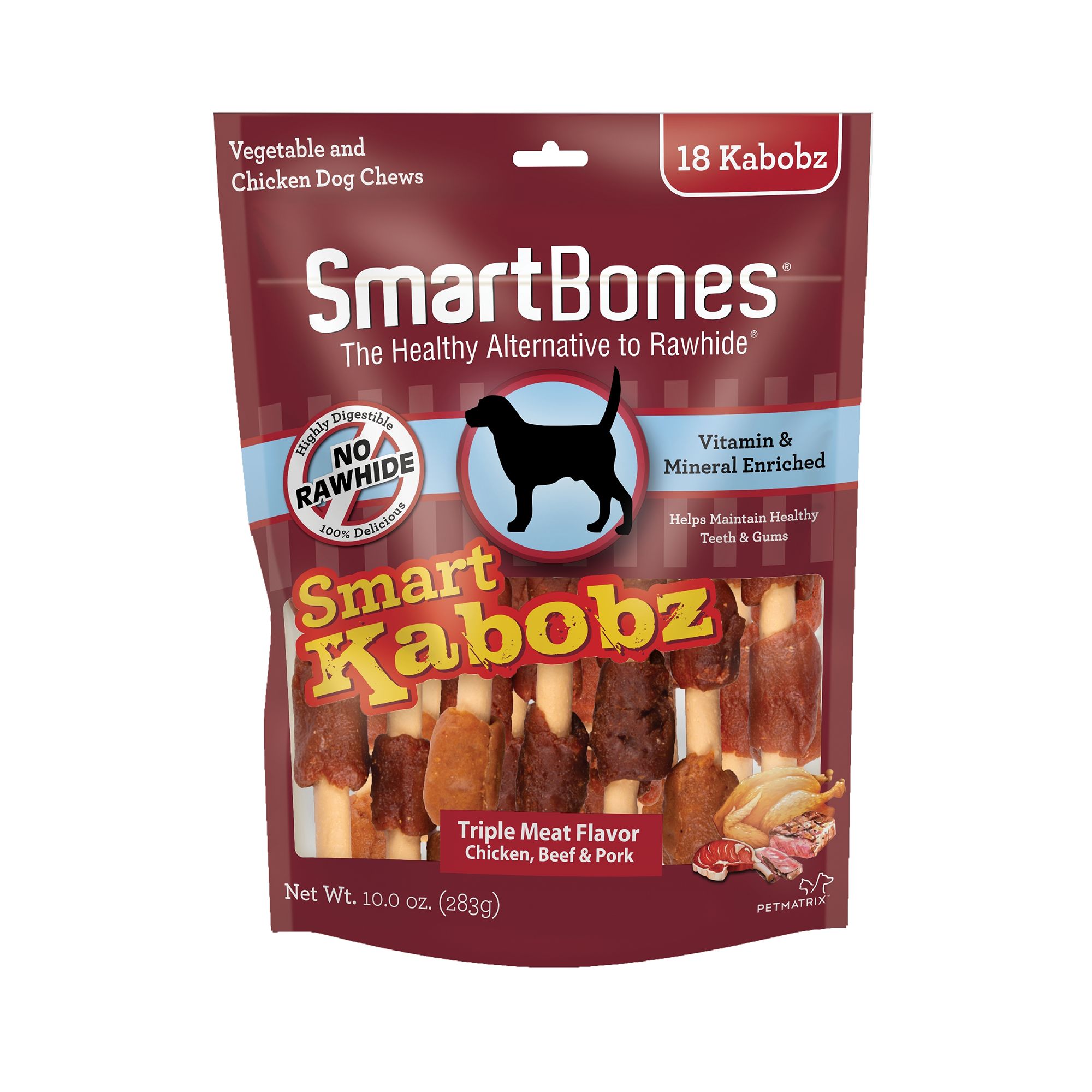
by SmartBones
Overall Score: 63/100
Ingredients
- Chicken (protein)
- Wheat (carbohydrate)
- Sweet Potatoes (carbohydrate)
- Glycerin (other)
- Soybean (carbohydrate)
- Sorbitol (other)
- Maltodextrin (other)
- Barley Malt Syrup (other)
- Carrots (other)
- Peas (carbohydrate)
- Natural and Artificial Flavors (other)
- Salt (mineral)
- Carrageenan (additive)
- Titanium Dioxide (other)
- Potassium Sorbate (Preservative) (other)
- Xanthan Gum (additive)
- Dicalcium Phosphate (mineral)
- Sodium Pyrophosphate (other)
- Sodium Propionate (Preservative) (other)
- Sodium Tripolyphosphate (other)
- Ferrous Sulfate (mineral)
- Vitamin E Supplement (vitamin)
- D-Calcium Pantothenate (other)
- Zinc Sulfate (mineral)
- Thiamine Hydrochloride (vitamin)
- Pyridoxine Hydrochloride (other)
- FD&C Yellow No (other)
Ingredient concerns
- Wheat (medium concern): Wheat is a common allergen in dogs and cats. While it provides digestible carbohydrates and some protein, it is frequently used as an inexpensive filler. Pets with wheat sensitivities may experience skin irritation, gastrointestinal upset, or chronic ear infections.
- Soy (medium concern): Soy is a common allergen in dogs and cats. It contains phytoestrogens that may affect hormonal balance, though the clinical significance in pets is not fully established. Often used as an inexpensive protein and carbohydrate filler. Most soy in pet food is genetically modified.
- Peas (low concern): Peas and other legumes have been associated with the FDA investigation into a potential link between grain-free diets high in legumes and dilated cardiomyopathy (DCM) in dogs. While a definitive causal relationship has not been established, the FDA continues to investigate. Peas are frequently used in grain-free formulations as a primary carbohydrate and protein source.
- Carrageenan (high concern): Research has shown that both degraded carrageenan (poligeenan) and food-grade carrageenan can promote intestinal inflammation in animal models. Studies have linked carrageenan exposure to intestinal lesions, ulcerations, and colitis-like symptoms in laboratory animals. While the FDA considers food-grade carrageenan safe, concerns remain about degradation during processing and digestion. The Cornucopia Institute petitioned the USDA to remove carrageenan from organic food standards.
Guaranteed analysis (dry-matter basis)
On a dry-matter basis (water removed for a fair wet-vs-dry comparison): protein 10.7%, fat 0.2%, fiber 1.8%, ash 7.5%, carbohydrate 79.8%. By calories: 11.8% from protein, 0.5% from fat, 87.7% from carbohydrate.
Dry food, with grains.
Similar products
- SmartBones Chicken Wrapped Stuffed Twists Dog Treats 10 Count 13.7 OZ — 87/100
- SmartBones® Chicken Wrapped Sticks Mini Dog Treat - Chicken — 86/100
- SmartBones® Smart Twist Sticks Dog Treat - Chicken — 86/100
- SmartBones® SmartSticks Dog Treat - Chicken — 86/100
- SmartBones® Chicken Wrapped Twists Dog Treat - Peanut Butter — 84/100
As an Amazon Associate, KibbleWatcher earns from qualifying purchases at no cost to you. Our scoring is independent of any affiliate revenue.