Purina Dog Chow High Protein with Real Chicken
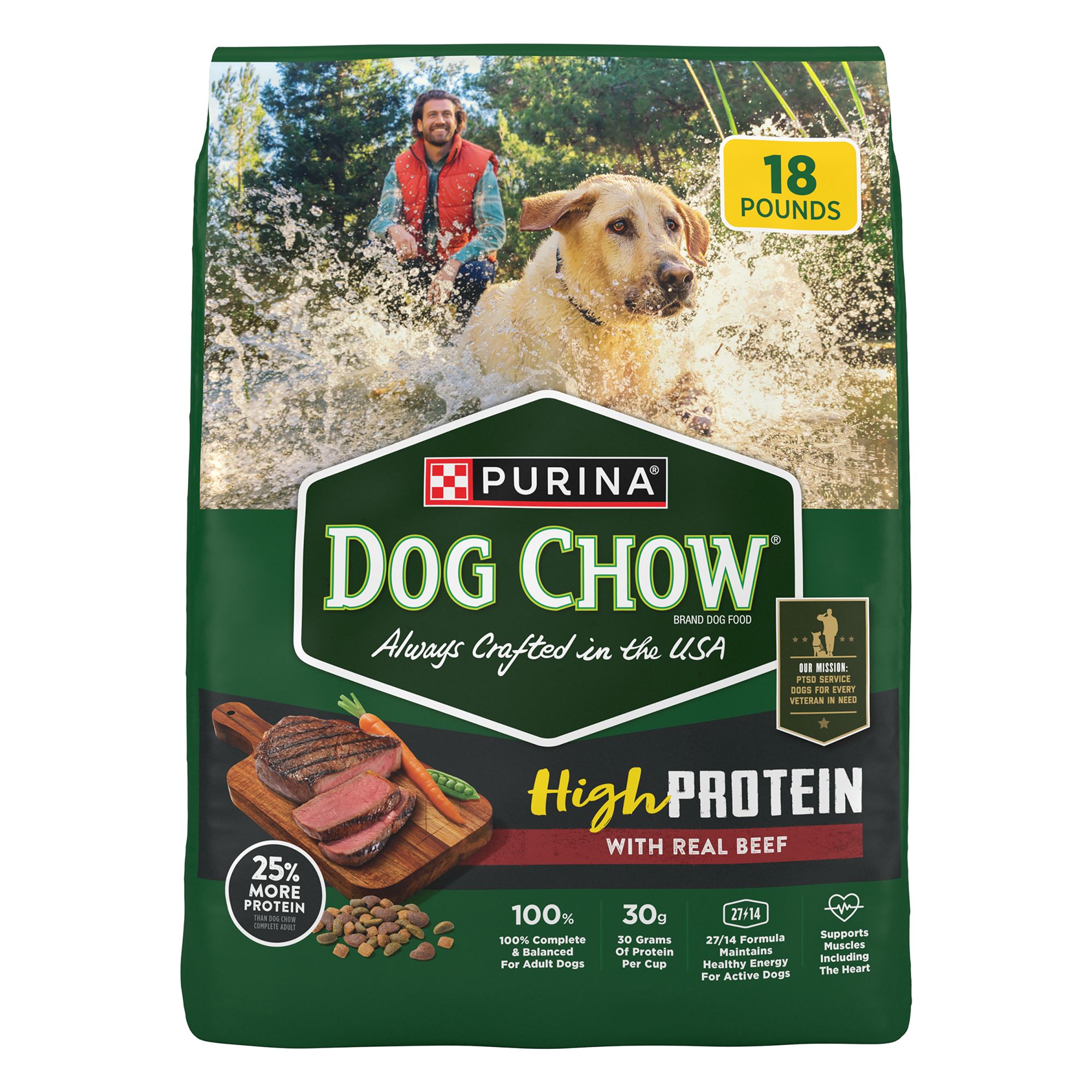
Overall Score: 87/100
Ingredients
- Beef (protein)
- Natural Flavor (additive)
- Egg And Chicken Flavor (protein)
- Salt (mineral)
- Potassium Chloride (mineral)
- Fish Oil (protein)
- Dried Peas (carbohydrate)
- Calcium Carbonate (mineral)
- Choline Chloride (vitamin)
- MINERALS [Zinc Sulfate (other)
- Ferrous Sulfate (mineral)
- Manganese Sulfate (other)
- Copper Sulfate (other)
- Calcium Iodate (mineral)
- Sodium Selenite] (other)
- VITAMINS [Vitamin E Supplement (other)
- Niacin (Vitamin B–3) (other)
- Thiamine Mononitrate (Vitamin B–1) (other)
- Calcium Pantothenate (Vitamin B–5) (other)
- Vitamin A Supplement (vitamin)
- Riboflavin Supplement (Vitamin B–2) (other)
- Vitamin B–12 Supplement (other)
- Pyridoxine Hydrochloride (Vitamin B–6) (other)
- Folic Acid (Vitamin B–9) (other)
- Menadione Sodium Bisulfite Complex (Vitamin K) (other)
- Biotin (Vitamin B–7) (other)
- Vitamin D–3 Supplement] (other)
- Carrots (other)
- L–Lysine Monohydrochloride (other)
- Red 40 (additive)
- Yellow 5 (additive)
Ingredient concerns
- Peas (low concern): Peas and other legumes have been associated with the FDA investigation into a potential link between grain-free diets high in legumes and dilated cardiomyopathy (DCM) in dogs. While a definitive causal relationship has not been established, the FDA continues to investigate. Peas are frequently used in grain-free formulations as a primary carbohydrate and protein source.
- Sodium Selenite (low concern): Sodium selenite is an inorganic form of selenium with a narrower safety margin than organic forms (such as selenium yeast). It has lower bioavailability and higher potential for toxicity at elevated levels compared to organic selenium sources. Some premium pet foods use selenium yeast instead as a safer alternative.
- Menadione Sodium Bisulfite Complex (high concern): Menadione (vitamin K3) is a synthetic form of vitamin K that has been banned for use in human dietary supplements in many countries due to toxicity concerns, including potential liver damage, allergic reactions, and cytotoxicity. It can cause oxidative damage to cell membranes. Natural forms of vitamin K (K1 from plants, K2 from bacterial fermentation) are considered safer alternatives. Despite these concerns, it remains widely used in pet food as an inexpensive vitamin K source.
- Red 40 (high concern): Provides no nutritional benefit whatsoever and is added solely for the visual appeal to human buyers, as dogs and cats have limited color vision. Multiple studies have raised concerns about behavioral effects in children, leading the EU to require warning labels on foods containing Red 40. Some animal studies have suggested potential genotoxicity, though results are debated. The FDA maintains it is safe at approved levels, but many veterinary nutritionists recommend avoiding artificial colors entirely.
- Yellow 5 (high concern): Like Red 40, Yellow 5 provides no nutritional value and is added only for appearance. It has been associated with hypersensitivity reactions and behavioral effects in children in multiple studies. Banned or restricted in several countries. The EU requires warning labels on products containing tartrazine. No legitimate reason for its inclusion in pet food.
Guaranteed analysis (dry-matter basis)
On a dry-matter basis (water removed for a fair wet-vs-dry comparison): protein 23.3%, fat 11.1%, fiber 0%, ash 7.5%, carbohydrate 58.1%. By calories: 21.5% from protein, 24.9% from fat, 53.6% from carbohydrate.
AAFCO compliance
This food meets the AAFCO adult dog nutrient minimums we can verify — protein 23.3% vs 18% minimum, fat 11.1% vs 5.5% minimum.
Dry food, grain-free, for the adult life stage.
Similar products
- Purina Dog Chow Tender & Crunchy Adult Dog Food - Lam & Turkey — 87/100
- Purina Dog Chow High Protein with Real Beef — 87/100
- Purina Dog Chow Tender and Crunchy With Real Lamb & Turkey Flavor — 86/100
- Purina Dog Chow Complere Adult Dry Dog Food - Chicken — 78/100
- Purina Dog Chow Complete Adult Dry Dog Food - Chicken — 43/100
As an Amazon Associate, KibbleWatcher earns from qualifying purchases at no cost to you. Our scoring is independent of any affiliate revenue.