Feline Selected Protein PD
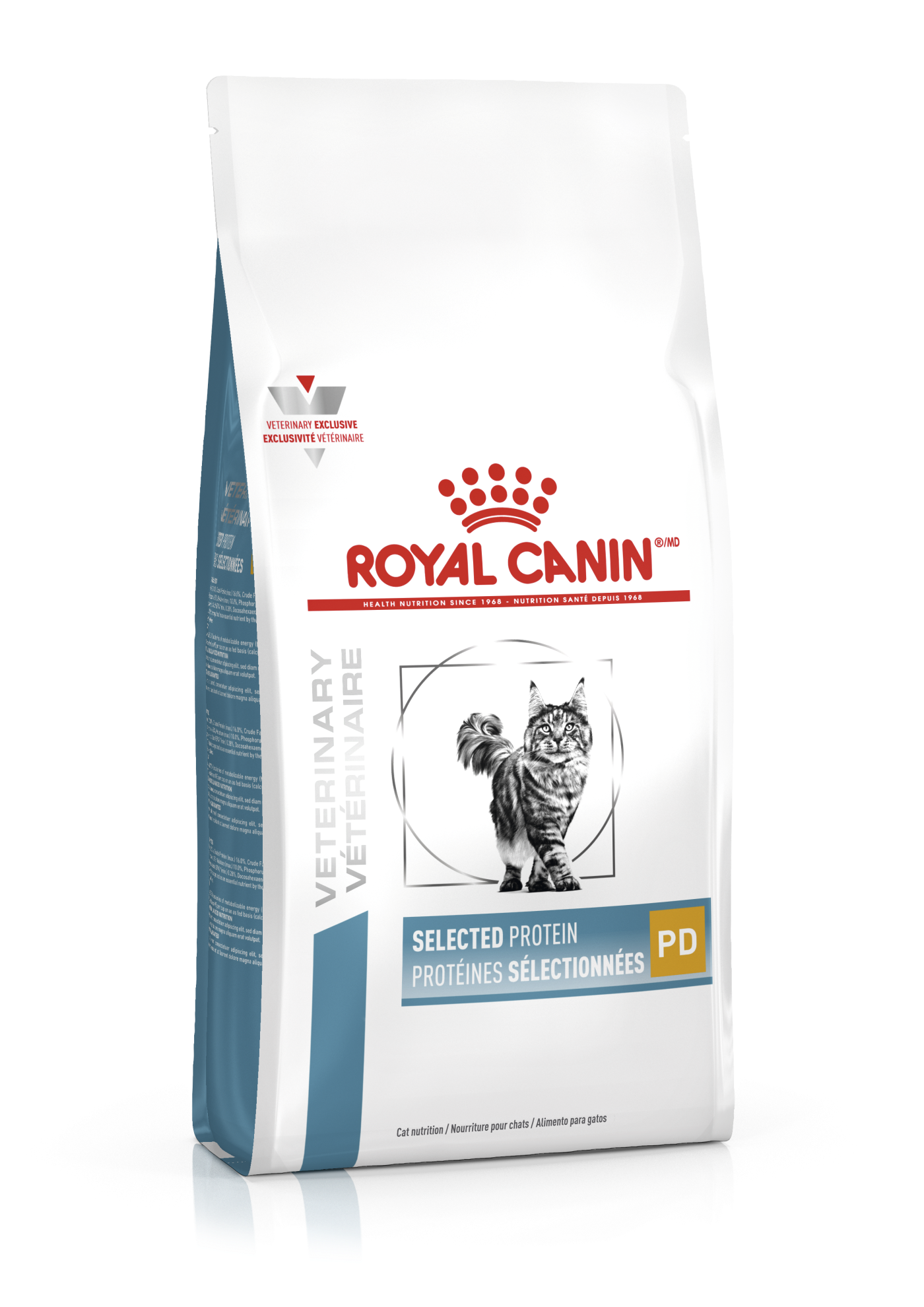
by Royal Canin
Overall Score: 69/100
Ingredients
- Peas (carbohydrate)
- duck by product meal (protein)
- pea protein (protein)
- coconut oil (fat)
- natural flavors (additive)
- hydrolyzed soy protein (other)
- vegetable oil (other)
- calcium sulfate (other)
- sodium bisulfate (additive)
- DL-methionine (other)
- fish oil (protein)
- sodium pyrophosphate (other)
- choline chloride (vitamin)
- salt (mineral)
- monocalcium phosphate (other)
- vitamins [DL-alpha tocopherol acetate (source of vitamin E) (other)
- niacin supplement (vitamin)
- L-ascorbyl-2-polyphosphate (source of vitamin C) (other)
- D-calcium pantothenate (other)
- biotin (vitamin)
- pyridoxine hydrochloride (vitamin B6) (other)
- riboflavin supplement (vitamin)
- thiamine mononitrate (vitamin B1) (other)
- vitamin A acetate (vitamin)
- folic acid (vitamin)
- vitamin B12 supplement (vitamin)
- vitamin D3 supplement] (other)
- taurine (additive)
- calcium carbonate (mineral)
- trace minerals [zinc proteinate (other)
- zinc oxide (other)
- manganese proteinate (mineral)
- ferrous sulfate (mineral)
- manganous oxide (other)
- copper sulfate (other)
- sodium selenite (mineral)
- calcium iodate (mineral)
- copper proteinate] (other)
- rosemary extract (preservative)
- preserved with mixed tocopherols and citric acid (other)
Ingredient concerns
- Peas (low concern): Peas and other legumes have been associated with the FDA investigation into a potential link between grain-free diets high in legumes and dilated cardiomyopathy (DCM) in dogs. While a definitive causal relationship has not been established, the FDA continues to investigate. Peas are frequently used in grain-free formulations as a primary carbohydrate and protein source.
- Pea Protein (medium concern): Plant-based protein concentrates like pea protein can artificially inflate the total protein percentage on guaranteed analysis without providing the same amino acid profile as animal proteins. Associated with the FDA investigation into grain-free diets and dilated cardiomyopathy (DCM) in dogs, though a causal link has not been definitively established.
- Sodium Selenite (low concern): Sodium selenite is an inorganic form of selenium with a narrower safety margin than organic forms (such as selenium yeast). It has lower bioavailability and higher potential for toxicity at elevated levels compared to organic selenium sources. Some premium pet foods use selenium yeast instead as a safer alternative.
Guaranteed analysis (dry-matter basis)
On a dry-matter basis (water removed for a fair wet-vs-dry comparison): protein 32.6%, fat 12%, fiber 6.3%, ash 7.5%, carbohydrate 41.6%. By calories: 31.5% from protein, 28.2% from fat, 40.3% from carbohydrate.
AAFCO compliance
This food meets the AAFCO adult cat nutrient minimums we can verify — protein 32.6% vs 26% minimum, fat 12% vs 9% minimum.
Dry food, with grains.
Similar products
- Kitten Thin Slices in Gravy Canned Cat Food — 95/100
- Feline Urinary SO® Moderate Calorie morsels in gravy — 93/100
- Royal Canin Cat - Kitten, Multipack, 18 CT, 54 OZ — 93/100
- Feline Renal Support T thin slices in gravy — 93/100
- Feline Gastrointestinal Loaf — 92/100
As an Amazon Associate, KibbleWatcher earns from qualifying purchases at no cost to you. Our scoring is independent of any affiliate revenue.