Purina Pro Plan Veterinary Diets UR Urinary St/Ox All Life Stages Wet Cat Food
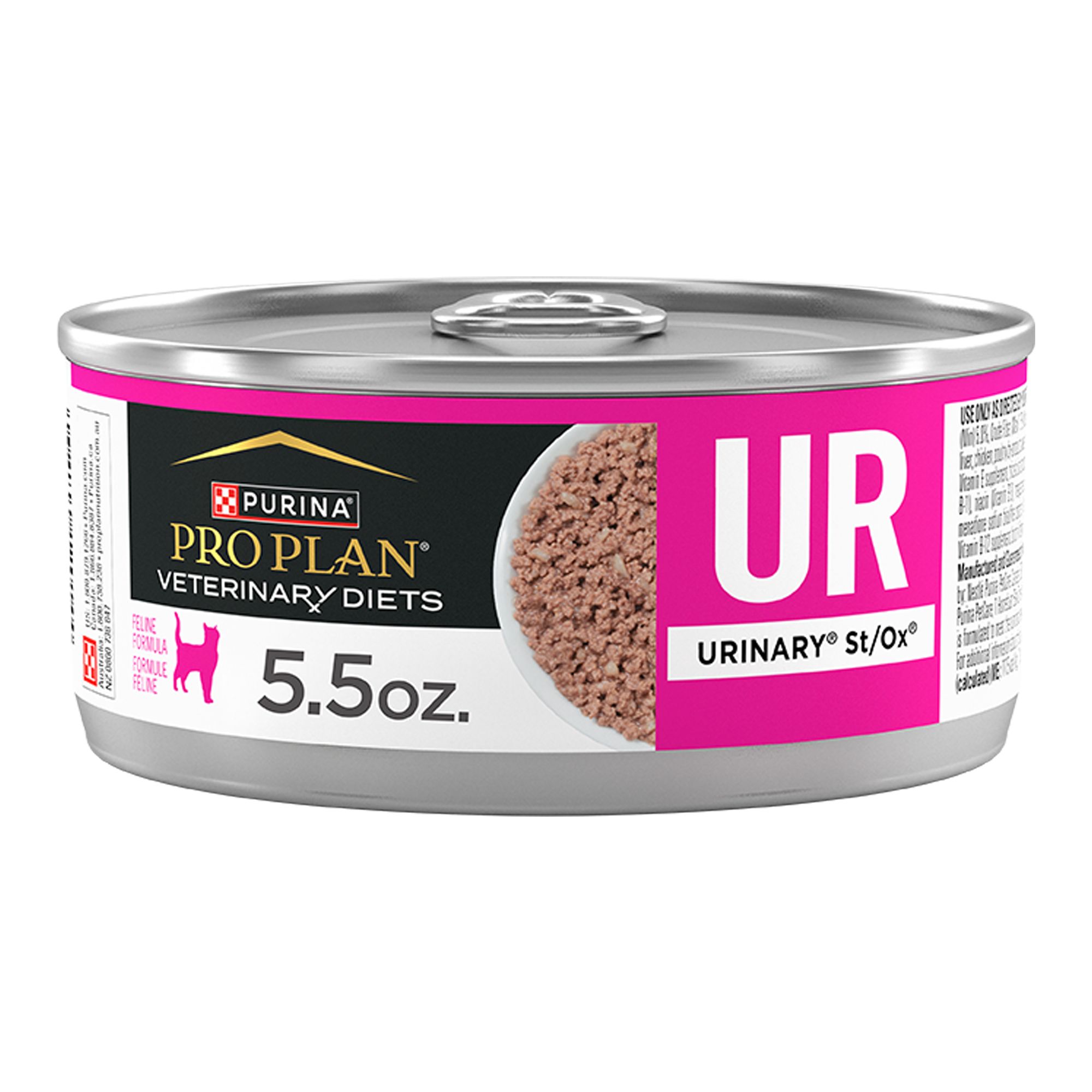
Overall Score: 68/100
Ingredients
- Chicken (protein)
- Poultry By-Products (protein)
- Water (other)
- Rice (carbohydrate)
- Calcium Gluconate (other)
- Oat Hulls (other)
- Guar Gum (additive)
- Sodium Bisulfate (additive)
- Potassium Chloride (mineral)
- Salt (mineral)
- Vitamin E Supplement (vitamin)
- Tricalcium Phosphate (other)
- Taurine (additive)
- Carrageenan (additive)
- Zinc Sulfate (mineral)
- Ferrous Sulfate (mineral)
- Thiamine Mononitrate (Vitamin B-1) (other)
- Niacin (Vitamin B-3) (other)
- Manganese Sulfate (other)
- Copper Sulfate (other)
- Calcium Pantothenate (Vitamin B-5) (other)
- Vitamin A Supplement (vitamin)
- Menadione Sodium Bisulfite Complex (Vitamin K) (other)
- Pyridoxine Hydrochloride (Vitamin B-6) (other)
- Riboflavin Supplement (Vitamin B-2) (other)
- Vitamin B-12 Supplement (other)
- Biotin (Vitamin B-7) (other)
- Folic Acid (Vitamin B-9) (other)
- Potassium Iodide (other)
- Vitamin D-3 Supplement (other)
Ingredient concerns
- Poultry By-Products (medium concern): While 'poultry' is more specific than 'animal,' the term still encompasses multiple species (chicken, turkey, duck, etc.), making it less transparent than named single-species ingredients. Quality and digestibility vary based on the specific parts included.
- Carrageenan (high concern): Research has shown that both degraded carrageenan (poligeenan) and food-grade carrageenan can promote intestinal inflammation in animal models. Studies have linked carrageenan exposure to intestinal lesions, ulcerations, and colitis-like symptoms in laboratory animals. While the FDA considers food-grade carrageenan safe, concerns remain about degradation during processing and digestion. The Cornucopia Institute petitioned the USDA to remove carrageenan from organic food standards.
- Menadione Sodium Bisulfite Complex (high concern): Menadione (vitamin K3) is a synthetic form of vitamin K that has been banned for use in human dietary supplements in many countries due to toxicity concerns, including potential liver damage, allergic reactions, and cytotoxicity. It can cause oxidative damage to cell membranes. Natural forms of vitamin K (K1 from plants, K2 from bacterial fermentation) are considered safer alternatives. Despite these concerns, it remains widely used in pet food as an inexpensive vitamin K source.
Guaranteed analysis (dry-matter basis)
On a dry-matter basis (water removed for a fair wet-vs-dry comparison): protein 45.5%, fat 22.7%, fiber 6.8%, ash 7.5%, carbohydrate 17.5%. By calories: 38.5% from protein, 46.7% from fat, 14.8% from carbohydrate.
AAFCO compliance
This food meets the AAFCO adult cat nutrient minimums we can verify — protein 45.5% vs 26% minimum, fat 22.7% vs 9% minimum.
Wet food, with grains, for the all life stage.
Similar products
- Purina Pro Plan Adult 11+ Senior Wet Cat Food - High-Protein, Classic, 3 Oz — 92/100
- Purina Pro Plan All Life Stages Wet Cat Food - Classic, 3 Oz — 91/100
- Purina Pro Plan Cat - All Life Stages, Pate, Variety Pack, 24 CT, 72 OZ — 91/100
- Purina Pro Plan Sensitive Skin & Stomach Adult Wet Cat Food - Grain Free, Variety Pack, 24 CT, 72 OZ — 90/100
- Purina® Pro Plan® Veterinary Diets DM Dietetic Management Wet Cat Food — 87/100
As an Amazon Associate, KibbleWatcher earns from qualifying purchases at no cost to you. Our scoring is independent of any affiliate revenue.