Adult 7+ Cat Food
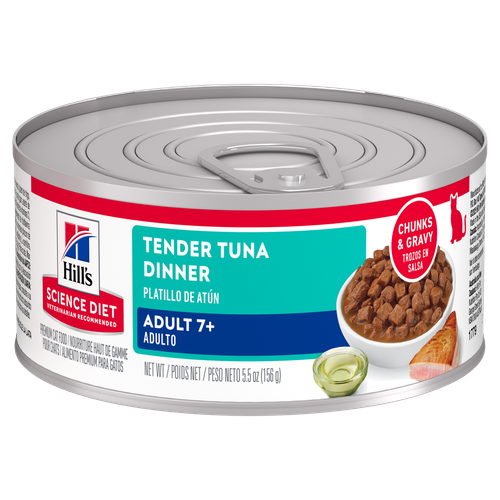
Overall Score: 80/100
Ingredients
- Water (other)
- Tuna (other)
- Chicken (protein)
- Pork Liver (protein)
- Wheat Flour (carbohydrate)
- Dextrose (other)
- Modified Rice Starch (other)
- Oat Fiber (other)
- Wheat Gluten (carbohydrate)
- Pork Plasma (protein)
- Soybean Oil (fat)
- Glycine (other)
- Potassium Chloride (mineral)
- Dicalcium Phosphate (mineral)
- Calcium Carbonate (mineral)
- Natural Flavor (additive)
- Guar Gum (additive)
- Fish Oil (protein)
- Choline Chloride (vitamin)
- Cysteine (other)
- vitamins (Vitamin E Supplement, Thiamine Mononitrate, Ascorbic Acid (source of Vitamin C), Niacin Supplement, Pyridoxine Hydrochloride, Calcium Pantothenate, Vitamin B12 Supplement, Riboflavin Supplement, Menadione Sodium Bisulfite Complex (source of Vitamin K), Biotin, Vitamin D3 Supplement, Folic Acid) (other)
- minerals (Calcium Chloride, Zinc Oxide, Ferrous Sulfate, Copper Sulfate, Manganous Oxide, Calcium Iodate) (other)
- Taurine (additive)
- Iodized Salt (other)
- DL-Methionine (other)
- L-Carnitine (additive)
- Caramel color (additive)
- Beta-Carotene (other)
Ingredient concerns
- Wheat (medium concern): Wheat is a common allergen in dogs and cats. While it provides digestible carbohydrates and some protein, it is frequently used as an inexpensive filler. Pets with wheat sensitivities may experience skin irritation, gastrointestinal upset, or chronic ear infections.
- Wheat Gluten (medium concern): Like corn gluten meal, wheat gluten serves as an inexpensive plant protein that inflates the total protein percentage. It was also at the center of the 2007 pet food recall when melamine-contaminated wheat gluten from China caused widespread kidney failure in pets.
- Menadione Sodium Bisulfite Complex (high concern): Menadione (vitamin K3) is a synthetic form of vitamin K that has been banned for use in human dietary supplements in many countries due to toxicity concerns, including potential liver damage, allergic reactions, and cytotoxicity. It can cause oxidative damage to cell membranes. Natural forms of vitamin K (K1 from plants, K2 from bacterial fermentation) are considered safer alternatives. Despite these concerns, it remains widely used in pet food as an inexpensive vitamin K source.
- Caramel Color (high concern): Certain classes of caramel color (Class III and IV, produced with ammonia or ammonia-sulfite processes) contain 4-methylimidazole (4-MEI), which has been classified as 'possibly carcinogenic to humans' (Group 2B) by IARC. California's Proposition 65 lists 4-MEI as a carcinogen. Like other color additives, it provides no nutritional benefit to pets.
Dry food, with grains, for the senior, adult life stages.
Similar products
- Kitten Sensitive Stomach & Skin Salmon & Vegetable Stew — 95/100
- Kitten Sensitive Stomach & Skin Salmon & Vegetables Stew Cat Food — 95/100
- Adult Sensitive Stomach & Skin Salmon & Vegetable Entrée Cat Food — 95/100
- Adult Sensitive Stomach & Skin Salmon & Tuna Dinner — 95/100
- Adult Healthy Cuisine Poached Salmon & Spinach Medley Cat Food — 95/100
As an Amazon Associate, KibbleWatcher earns from qualifying purchases at no cost to you. Our scoring is independent of any affiliate revenue.