Metabolic weight + j/d Vegetable and Tuna Wet Cat Food
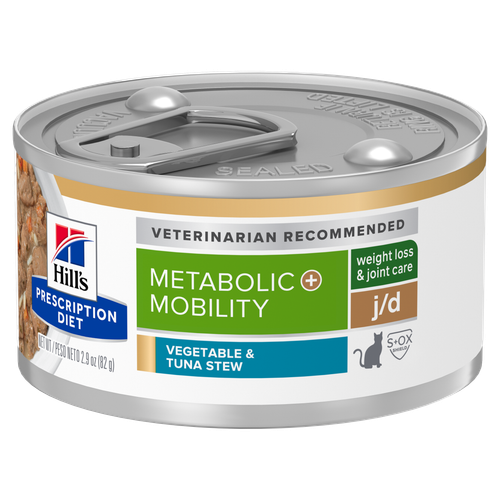
Overall Score: 85/100
Ingredients
- Chicken Broth (protein)
- Pork Liver (protein)
- Carrots (other)
- Tuna (other)
- Wheat Gluten (carbohydrate)
- Rice (carbohydrate)
- Spinach (other)
- Powdered Cellulose (fiber)
- Rice Starch (other)
- Flaxseed (fat)
- Dried Tomato Pomace (fiber)
- Hydrolyzed Chicken Flavor (protein)
- Coconut Oil (fat)
- Potassium Alginate (other)
- Fish Oil (protein)
- Dextrose (other)
- Calcium Chloride (other)
- Natural Flavor (additive)
- Soybean Oil (fat)
- Sugar (other)
- L-Lysine (other)
- Dicalcium Phosphate (mineral)
- vitamins (Vitamin E Supplement, Thiamine Mononitrate, L-Ascorbyl-2-Polyphosphate (source of Vitamin C), Niacin Supplement, Menadione Sodium Bisulfite Complex (source of Vitamin K), Pyridoxine Hydrochloride, Calcium Pantothenate, Vitamin B12 Supplement, Riboflavin Supplement, Folic Acid, Biotin, Vitamin D3 Supplement) (other)
- Calcium Lactate (other)
- Calcium Gluconate (other)
- Monosodium Phosphate (other)
- Taurine (additive)
- Guar Gum (additive)
- Choline Chloride (vitamin)
- Potassium Chloride (mineral)
- Chondroitin Sulfate (additive)
- Sodium Tripolyphosphate (other)
- minerals (Manganese Sulfate, Ferrous Sulfate, Zinc Oxide, Copper Sulfate, Calcium Iodate) (other)
- L-Carnitine (additive)
- Glucosamine Hydrochloride (additive)
- Beta-Carotene (other)
Ingredient concerns
- Wheat Gluten (medium concern): Like corn gluten meal, wheat gluten serves as an inexpensive plant protein that inflates the total protein percentage. It was also at the center of the 2007 pet food recall when melamine-contaminated wheat gluten from China caused widespread kidney failure in pets.
- Menadione Sodium Bisulfite Complex (high concern): Menadione (vitamin K3) is a synthetic form of vitamin K that has been banned for use in human dietary supplements in many countries due to toxicity concerns, including potential liver damage, allergic reactions, and cytotoxicity. It can cause oxidative damage to cell membranes. Natural forms of vitamin K (K1 from plants, K2 from bacterial fermentation) are considered safer alternatives. Despite these concerns, it remains widely used in pet food as an inexpensive vitamin K source.
Wet food, with grains.
Similar products
- y/d with Chicken Wet Cat Food — 93/100
- Gastrointestinal Biome Stress Chicken & Carrots Stew Cat Food — 93/100
- Gastrointestinal Biome Stress Chicken & Vegetable Stew Cat Food — 93/100
- Hill's Prescription Diet i/d Digestive Care Kitten Wet Cat Food - Chicken — 93/100
- Hill's Prescription Diet i/d Digestive Care Kitten Dry Cat Food - 4 lb — 91/100
As an Amazon Associate, KibbleWatcher earns from qualifying purchases at no cost to you. Our scoring is independent of any affiliate revenue.